ARTHUR MAX,Associated Press Writers
JOELLE TESSLER,Associated Press Writers
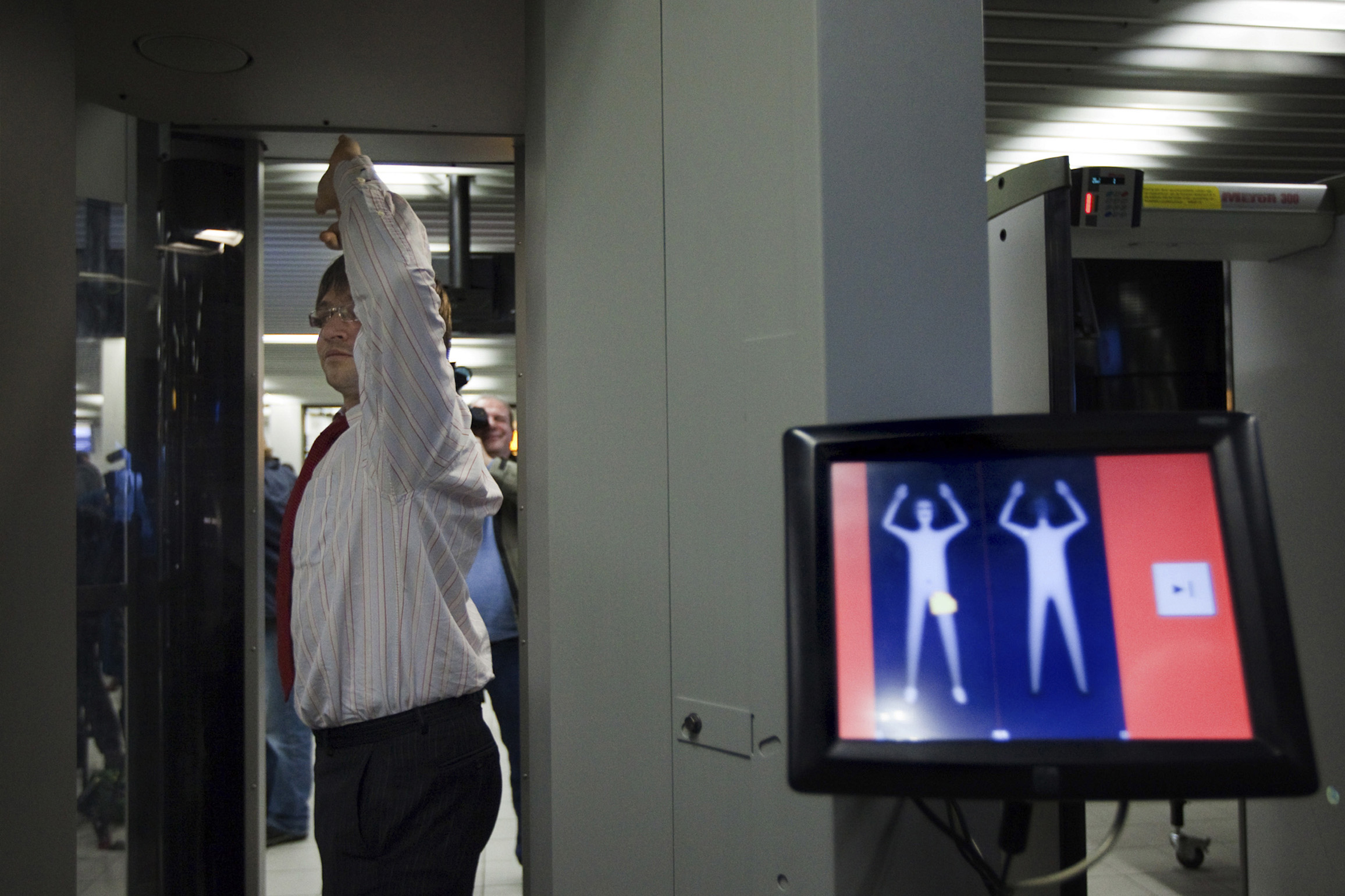
WASHINGTON (AP) — High-tech security scanners that might have prevented the Christmas Day attempt to blow up a jetliner have been installed in only a small number of airports around the world, in large part because of privacy concerns over the machines’ capability to see through clothing.
The body-scanning technology is in at least 19 U.S. airports, while European officials have generally limited it to test runs.
Umar Farouk Abdulmutallab, the Nigerian accused of trying to ignite explosives aboard a Northwest Airlines jet as it was coming in for a landing in Detroit, did not go through such a scan where his flight began, at Amsterdam’s Schiphol airport.
The full-body scanner “could have been helpful in this case, absolutely,” said Evert van Zwol, head of the Dutch Pilots Association.
The technology has raised significant protests among privacy watchdogs because it can show the body’s contours with embarrassing clarity. Those fears have slowed the introduction of the machines.
Jay Stanley, public education director for the American Civil Liberties Union’s Technology and Liberty Program, said the machines essentially perform “virtual strip searches that see through your clothing and reveal the size and shape of your body.”
Abdulmutallab passed through a routine security check at the gate in Amsterdam before boarding, officials said. He is believed to have tucked into his trousers or underwear a small bag holding PETN explosive powder, and possibly a liquid detonator.
Because such items will not set off metal detectors, the U.S. Transportation Security Administration, part of the Department of Homeland Security, has begun installing two types of advanced scanning machines that provide a more detailed picture.
These machines, each of which costs in the hundreds of thousands of dollars, screen airline passengers without physical contact. They can reveal plastic or chemical explosives and nonmetallic weapons.
Such scanners “provide the best protection for the widest range of threats,” said Joe Reiss, vice president of marketing for American Science & Engineering Inc. The company makes machines for prisons, military agencies, foreign customs patrols and other customers but does not have a contract with TSA.
Six of those machines, which are made by L-3 Communications Holdings Inc., are being used for what TSA calls “primary screenings” at six U.S. airports: Albuquerque, New Mexico; Las Vegas, Nevada; Miami, Florida; San Francisco, California; Salt Lake City, Utah; and Tulsa, Oklahoma.