By Daria Kroupoderova
When Monica Rojas-Stewart was fifteen, she was just like any other teenager. She would go hang out with her friends or go to parties. Then, one night something happened that would change her life.
She went to support a neighborhood friend at a dance recital, where she saw a couple perform a beautiful dance that had her mesmerized. She wanted to know every little thing about this dance.
“It’s like they took me on a trip…that was the beginning of the rest of my life,” Rojas-Stewart said. She even has a chapter about this moment in her dissertation.
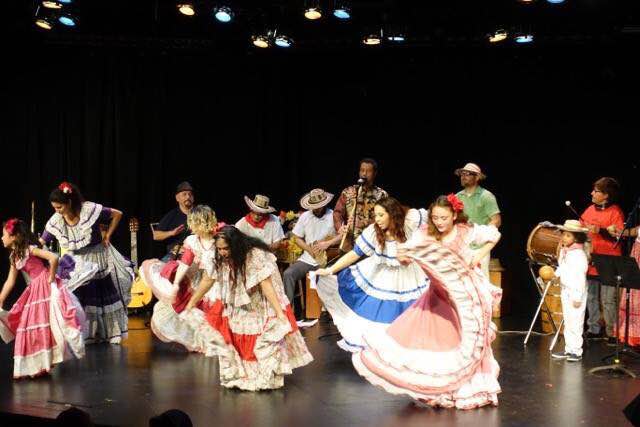
The dance and music were from a courtship dance called Marinera Limeña. There are many variations of the dance but the version from Lima, Peru has strong African influence within the dance. Rojas-Stewart had to learn everything about it.
Against her parents’ wishes, like any other teenager, she would tell them she was going to a friend’s house and instead would go to dance clubs where Afro-Peruvian dances were being performed.
“It was a constant fight with my poor parents, I was always sneaking out.”
The sneaking out and dancing paid off for Rojas-Stewart, who continued dancing through high school and college, while winning national dance competitions in Peru. But more importantly, she got to interact with the Afro-Peruvian communities.
“Through the music I started to learn about these communities.”
During her time dancing and spending time with the Afro-Latino community in Peru, Rojas-Stewart met a professor from Oregon State who wanted her to give lectures at his university. She ended up staying in the U.S.
Now, Rojas-Stewart, 47, is married with two children and is the executive director of MÁS
(Movimiento Afrolatino Seattle), a community program that is a space for Afro-Latinos in Seattle to meet, participate in music, art, and cultural workshops, and feel comfortable owning their blackness.
“What I’m doing through MÁS is creating a space for a population that has been denied, has been ignored…their voices are never heard,” Rojas-Stewart said.
The idea for MÁS started in 2013. Rojas-Stewart was meeting many artists that were doing very similar work with music and dance as her but from different countries such as Argentina and Brazil. She wanted to bring everyone together in one program so they can learn from each other and pass on the Afro-Latino history through music, art, and dance.
“Our kids are losing their identity; they don’t want to speak Spanish.” The younger generation is not embracing their Afro-Latino roots and instead are adopting the African American culture. Rojas-Stewart wants kids to be proud of their heritage.
Through MÁS, she is already seeing changes within the community. She hears more people speaking their native tongue. People are also coming up to her and thanking her for starting this program that helps them embrace their culture.
MÁS officially became an organization in March 2014. Supported mainly by the Department of Neighborhoods in Seattle, the organization offers workshops on culture, music, and dance. Anyone is welcome to participate in the workshops. They are currently being held at Casa Latina in Central District.
So far, the workshops have been packed. With a family-friendly environment, Rojas-Stewart wants people to bring their kids to the workshops.
Rojas-Stewart’s two daughters, Carmela and Cecilia also participate. They go to some of the workshops, dance, and follow their mom around to meetings.
“They are proud of who they are,” Rojas-Stewart said about her children. She makes sure that her kids keep their language too. Once dinner starts, everyone at the table must speak Spanish. Her husband, though not a native Spanish speaker, participates and encourages everything Rojas-Stewart does.
“I have an incredible husband that has been supporting me since day one.”
Others can really see Rojas-Stewart’s passion for the Afro-Latino community.
“You can really see that she cares,” Randy Salgado said. Salgado was a summer social media intern at MÁS where he helped build the organization’s website and ran their social media.
“She really wants people to understand the history of Afro-Latinos,” Salgado said.
MÁS is also a way for Rojas-Stewart to make a statement.
“This is my revolution; this is the way I want to…end racism. I believe racism is, among other things, a lack of education.” She views herself as a pacifist and not someone who would be out on the streets protesting with signs.
“Through education and using arts in a fun way, in a positive way, I think we can create change.”
Other than MÁS, Rojas-Stewart doesn’t have much time for anything else. She is currently the Assistant Director of African Studies and Latin American and Caribbean Studies at University of Washington, she is a mom, and she is an artist.
But she wouldn’t have it any other way.
“(MÁS) is a dream come true. It’s my baby.”