By Joy Chu
As the first person in his family to graduate high school and college, Ray Corona has experienced firsthand many of the obstacles immigrant families in the United States face. This inspired him to help others in similar situations by pushing for immigration changes. He is determined to help undocumented people find a path to getting permanent legal status.
Corona works to diversify the image that people have about Latino leaders through his work in education at the University of Washington’s Bothell campus and through advocacy. He pushes and promotes initiatives to help undocumented immigrants gain rights and opportunities in Washington state and across the country.
Corona’s understanding of his identity and his undocumented status helped him shape the narrative of his life, and sparked his passion for activism to help the futures of undocumented people in Washington and across the nation.
“Moving through life; growing up thinking about life, going to college…how was I going to make it happen? No one has led the way or paved the path,” said Corona, of the biggest issues he’s faced to date. “I knew that there wasn’t any institutional support in Washington in addition to no financial aid at the time.”
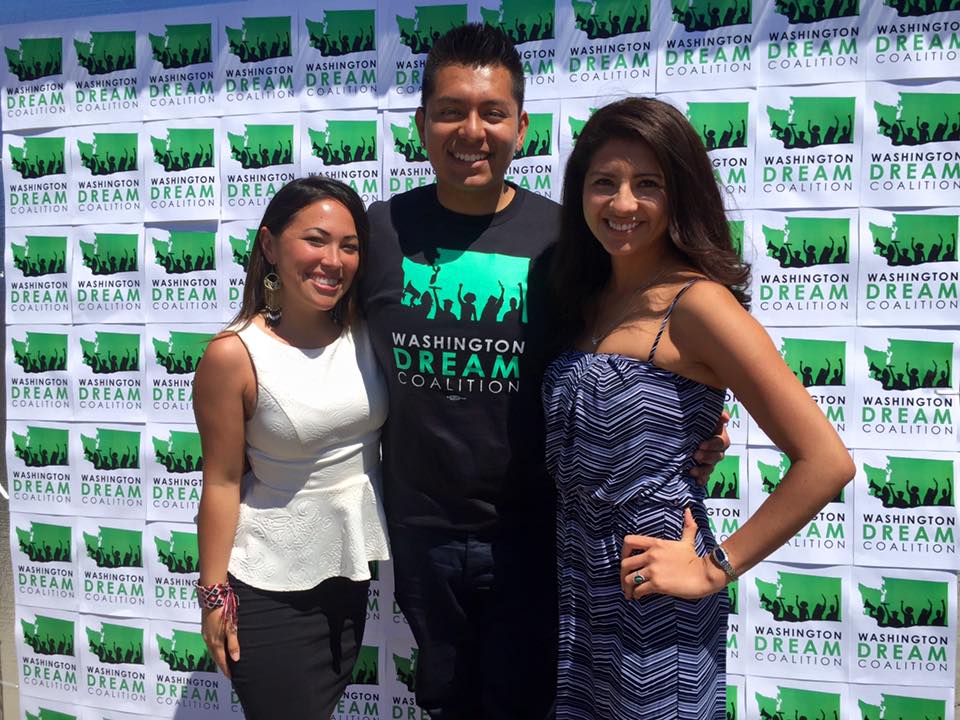
So now, he is committed to pushing legislature, specifically through his role as Executive Director of the Washington Dream Act Coalition.
The Washington Dream Act Coalition is a collective of young activists who got together to start pushing for changes in the state, especially increasing the resources that undocumented people have access to. The Dream Act, also known as the REAL Hope Act in Washington, is a proposal that expanded eligibility so that undocumented students could apply for state grants to help pay for college.
He also works with Latino progress group Progreso to directly lobby for education, public safety, environmental issues, and both K-12 and higher education at state legislature.
His passion is guided by his own immigration journey. Corona recalls moving to the United States from his hometown of Mexico City with his family when he was 9 years old. It wasn’t until high school that Corona even entertained the possibility of higher education, because his family would not be able to afford college. It was only through a scholarship from the Washington College Success Foundation that Corona was able to graduate from the University of Washington in Bothell (UW Bothell) with a degree in Society, Ethics, and Human Behavior in 2013.
After graduation, Corona stayed at UW Bothell to work for their admissions office to help high schoolers who are in the same position that he was in. There, he worked to provide not just Latino students but all students with the same opportunity for higher education that he received from the Washington College Success Foundation.
“Sometimes people get pigeonholed into segments; I’m here for immigrants in Washington State. We want to make it as inclusive and as expansive to other communities as we can,” he said.
In addition to his work advocating for immigration reform in Olympia, Corona also advocates at a national level. He worked on a campaign to push for deferred action, which led the president to take discretionary action and provide support for youth through the DACA (Deferred Action for Childhood Arrivals) Act. This act allows youth who come into the country and meet certain criteria to request consideration of deferred action for a period of two years.
Corona points out that it is very important to note that the DACA Act is only a temporary solution, meaning that it could go away with the next president.
“We are aware of social issues and how that impacts us in our daily lives. We’re watching, we’re listening, and we’re advocating for things to be different,” said Corona.
Through traveling across the U.S., Corona has a new sense of awareness and has met many other undocumented immigrants trying to find their way, further building strong connections and a sense of community along the way.
Corona said he’s fully committed to his advocacy, leaving no time for anything else: “When you have a full time job and are a full time activist, there’s no time for hobbies.”