
Ashley Stewart,
Special to La Raza
Seattle’s largest free health clinic is closed for the year, but there are still options for the 100,000 uninsured people in this state.
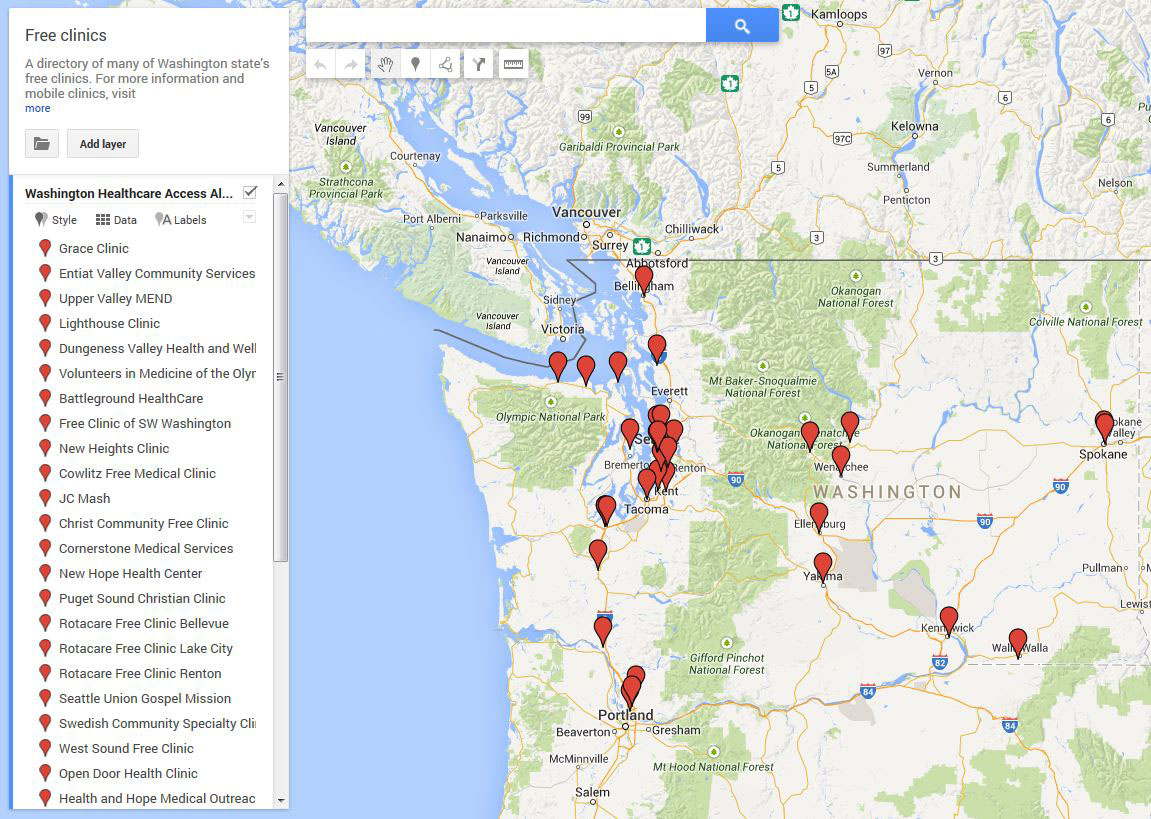
Nearly 50 clinics in Washington state alone provide free health and dental care without proof of citizenship – or questions about it. “Clinics really strive to provide linguistically- and culturally-appropriate care,” said Christine A. Lindquist, executive director of the Washington Healthcare Access Alliance.
More people in this state have health insurance than ever. So far, 28 states including the District of Columbia have opted to expand Medicaid for adults who earn less than 138 percent of the federal poverty level. Throughout the nation, that means more than 6 million additional enrollments – more than 350,000 in this state alone.
But, despite a higher rate of insured adults here, many in the medical community stress the need for affordable, accessible medical care – and scramble to fill it.
“Medicaid expansion doesn’t translate into access to care,” Lindquist said. “There’s still a great need and a false perception that insurance alone is the answer.”
Health care premiums and co-pays still aren’t affordable for many on Medicaid and undocumented immigrants or people who have lived in the U.S. for fewer than five years are ineligible for benefits. Patients may also see a shortage of Medicaid providers, says Lindquist, who leads an organization of more than 20 free clinics providing health care to the state’s 100,000 uninsured.
“You have a lot of people signed up, but not enough doctors to take them,” she said. “In Benton County, for example, only three dentists in the whole county accept Medicaid.”
Many in the state’s medical community are coming together to meet this need. Last month, more than 50 health care organizations from around the state volunteered time to create a massive, four-day free clinic in Seattle, providing medical, dental and vision care to underserved populations.
“We see the need,” Ivonne Rivera Martinez, the City of Seattle’s ethnic media coordinator, said. “We know it’s not a long-term fix, but we wanted to do something to help people immediately.”
Thousands flooded Key Arena from Thursday through Sunday for the Seattle/King County Clinic, where more than 500 health care volunteers donated services from medical and dental care to acupuncture and holistic medicine.
It was especially important for Latino communities, Martinez said. “While one in five people here are foreign born, many immigrants are afraid to seek medical care,” she said. “Many Latinos have not been able to go to the doctor because of their status.”
Although the clinic is over, Lindquist said free health care is still available.
While free clinics are typically for the uninsured, since the expansion of Medicaid, many in this state are revising their mission statements to included “underinsured” – meaning if a patient has insurance but can’t afford the co-pay or if their insurance doesn’t cover a particular service, free clinics will be an option.
Safe Harbor Free Clinic in Stanwood provides free urgent and chronic care, plus dental services. Just south in King County, more than 10 clinics provide services from walk-in medical, mental health care and dental care to naturopathic medicine, acupuncture and massage therapy.
Nearby in King County, more than 10 clinics provide services such as walk-in chronic and acute care and counseling services at New Hope Health Center in Tukwila to advanced medical and dental care at Swedish Community Specialty Clinic in Seattle.
Most can connect patients will low-cost options for prescriptions and other outside services.
For more information about free clinics and other services, visit www.wahealthcareaccessalliance.org.