
AP
When MIT researchers sought volunteers willing to have their trash tagged and tracked, Jodee Fenton offered up about 10 household items including a pair of running shoes.
Then she tossed them as she normally would, and watched as the electronic tracking devices gave clues to its journey: Plastic wrap went from her Seattle curb to Eastern Washington and then Texas. An old computer recycled near downtown Seattle was traced to New Mexico and then Mexico. The shoes stayed in south Seattle. “Out of sight out of mind, but it truly isn’t,” said Fenton, 62, a project volunteer who works as a special collections manager for Seattle’s main library. “It forces us to ask the questions: What are we really doing with all this trash and maybe we should be thinking about new ways of manufacturing or getting rid of it.”
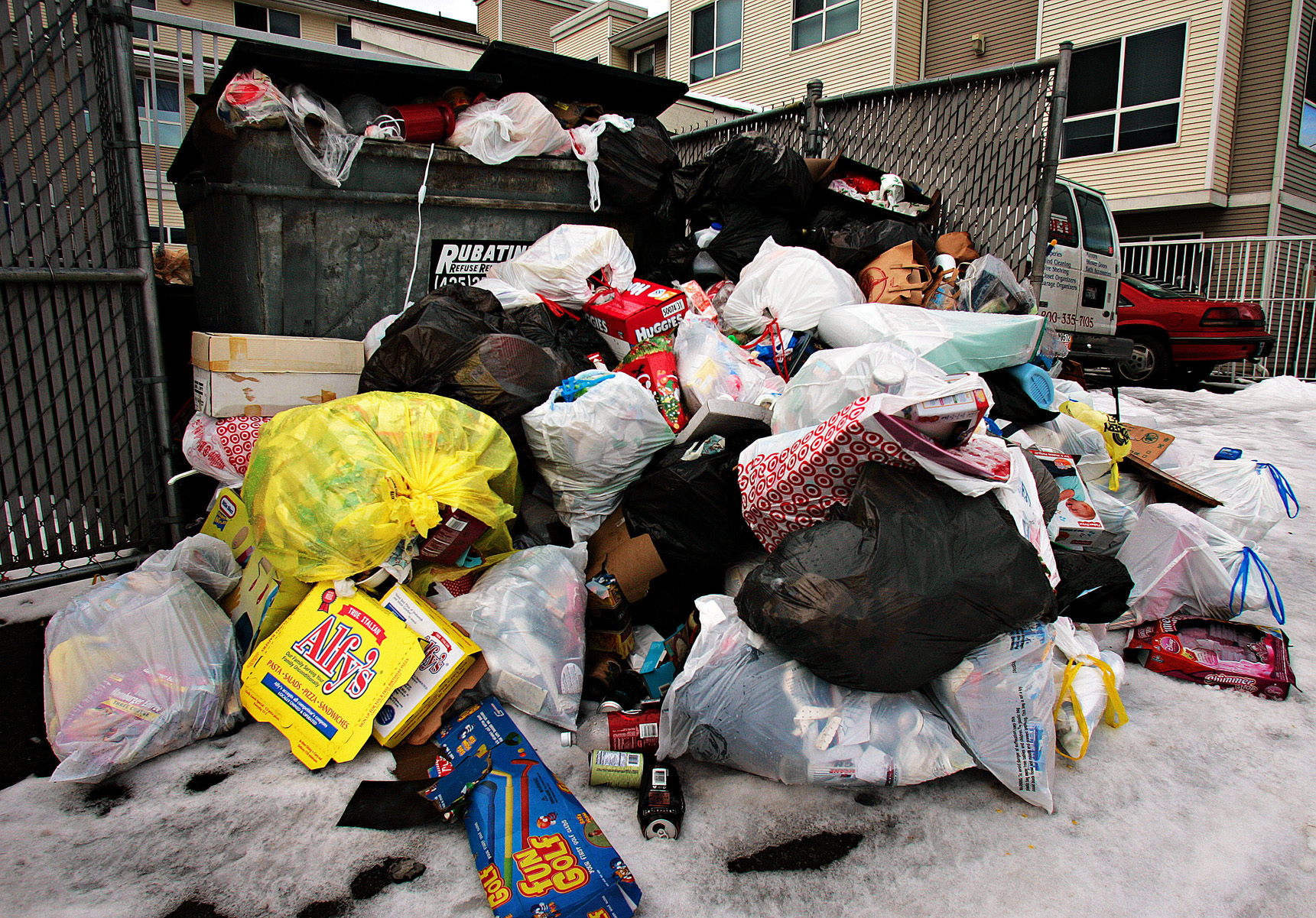
MIT researchers tracking 3,000 pieces of Seattle’s trash in an unusual project have found that a majority of that garbage ended up at recycling facilities. In 2009, a team from MIT’s SENSEable City Lab went to the homes of Seattle volunteers and affixed smart tags to pizza boxes, printer cartridges, cell phones and other items. They also tagged items that the public brought to a Seattle Public Library event.
Researchers wanted to get people thinking about where trash goes once it gets tossed..
It turns out, some of that trash traveled long distances. Computers and other electronic waste, for example, traveled on average more than 950 miles on their way to specialized reuse and recycling facilities. Cell phones were tracked to Florida, printer cartridges to Tennessee and batteries to Minnesota.
The MIT team even traced one printer cartridge about 3,800 miles, as it traveled by truck to Chicago and then by plane to near the California border with Mexico, Trash Track project leader Dietmar Offenhuber said. Another printer cartridge arrived at the same facility from Seattle, but took a different route along the Pacific coast.
The distance that some of these items travel also raises questions about the carbon emissions produced in getting waste to a recycling facility.
The city of Seattle has a contract with a recycling facility, requiring that it has 95 percent of the material recycled, Stav said, so it’s not surprising to hear that most gets recycled. “It’s an audit of our system. It shows our recycling does work,” he added.
But Brett Stav, a planning and development specialist for Seattle Public Utilities, said there are many ways to weigh the value of recycling, such as keeping some toxic materials out of landfills. “Just because there’s a carbon footprint, does that mean you shouldn’t recycle it?”The vast majority of the trash MIT tracked reached a facility that followed federal Environmental Protection Agency standards.The city’s trash is typically taken to two city transfer stations before being loaded onto a train to a landfill in Oregon about 300 miles away.