By Randy Salgado,
La Raza del Noroeste
<p
A few states allow residents without U.S. citizenship an opportunity to vote in local elections, and the city of Seattle might soon be ready to follow suit.
Many non-citizen newcomers in Seattle are wanting to put down roots and get involved in how Seattle runs, but can’t because they’re not citizens. Advocates and one former mayor of Seattle believe there is a way.
The city of Seattle is rapidly growing, and nearly 20 percent of people who live here are born abroad. This kind of growth makes for a groundswell of support for initiatives that get non-citizens involved in the voting process.
“As a member of this community, as a member of the city, I would like my interests be represented in local city government,” said Ray Corona, who works for the Washington Dream Coalition and who identifies as undocumented.
Corona, who has lived here in the state of Washington since he was 9, remembers when he was an 18-year-old student in high school there would be voting registration booths for elections and he would feel excluded.
“Having [to] explain why I am not able to vote is kind of an embarrassing moment, and I think that’s a moment many people can connect with,” said Corona.
Former Seattle Mayor Mike McGinn is especially passionate about the subject. He believes non-citizens should have voting rights in Seattle elections but should prepare the public for this idea.
“If they recommended non-citizen voting to me I would be thumbs up,” said McGinn.
He argues that during Washington’s early days as a U.S. territory, citizenship was not a big requirement to vote, although it was strictly restricted by race and gender.
Abraham Rodriguez, a legal U.S. resident and graduate from Western Washington University thinks of voting as a way to serve the community.
“I am really focused on serving the community and implicating changes that I think are important in my personal life and people in my community,” said Rodriguez.
Rodriguez believes he is entitled to civic engagement in the same way that non-citizens who are on track to become citizens are allowed in other municipalities. Non-citizens in Takoma Park, Maryland, who claim to be on track to become citizens are allowed to vote in city elections there.
Montgomery County Council member George L. Leventhal told the Washington Post recently that people in Takoma Park who own a home, get garbage picked up, or want their street paved will not address the issue of national citizenship.
The pattern of non-citizen voting has been a slow groundsweel which began in 1993 with Takoma Park but later the city of Chicago allowed non-citizens to vote in local school district elections. This pattern has Corona advocating for the voting rights of non-citizens in the city of Seattle.
Corona especially takes issue with paying taxes when he has no voting right.
“If I were able to vote, it would mean the true meaning of democracy,” said Rodriguez.
In the face of money, power, and influence, voting is the ultimate recourse of the public in a democracy, McGinn said in the Stranger recently.
McGinn explains that people who pay taxes, send their children to school, and run businesses while having concerns of local public safety should be able to vote for local elected officials because they deserve a voice in the democracy.
McGinn’s father was the son of immigrant parents who migrated from Ireland. McGinn’s father grew up in New York City. McGinn explains that with his immigrant background, it reinforces the idea of this country being built on people coming to the U.S. trying to make a living.
“When someone makes a commitment to come here, live here, work here to make a life for themselves, we should honor that,” said McGinn.
McGinn’s father was a poor city kid, but a role model to him, he said. He ended up working at a neighborhood house to support immigrant families.
His father also actively participated in local youth programs and teen programs at school districts, which led him to become a school district administrator, said McGinn.
“I think one of the big misconceptions of immigrants in this country is that they don’t take responsibility for their actions,” said Corona. “I definitely believe this is the only and first step in members of the community, people of color, and non-citizens to be part of the community fully in addition taking responsibility for the community they live in.”
Corona wants members of the community to understand the importance of placing a ballot. He says that at the end of the day, voting will increase their ability to fully embrace the values of the overall community.
“For me to see folks say they care about the city, but don’t vote is quite a contradiction,” said Rodriguez. “You have people living, like people like myself, has donated more than 40 percent of my income in the past three years to things I care about.”
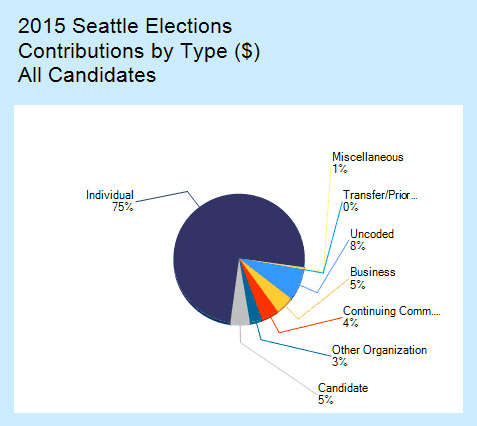
Unlike Corona, Rodriguez is able to contribute to campaigns such as Initiative 122 which limits campaign contributions from corporate companies from spending significant amount of funds. This means legal U.S. residents are able to donate money to ensure candidates focus less on needs of big money donors and spend more time listening to voters.
Rodriguez said he’s furious at people who don’t take advantage of their voting privilege.
“My money accounts for more than my vote,” said Rodriguez.
McGinn believes the first step to local non-citizen voting is to begin public dialogue by organizing with other people like Corona around education of the public.
“I feel like we first have to [start] the conversation within the community because this isn’t just an issue that affects me, who is not able to vote, but also an issue that will affect the current voters,” said Corona. “I think people should be concerned about the electoral system not being democratic enough or not being able to represent all the people who reside in this local community.”